
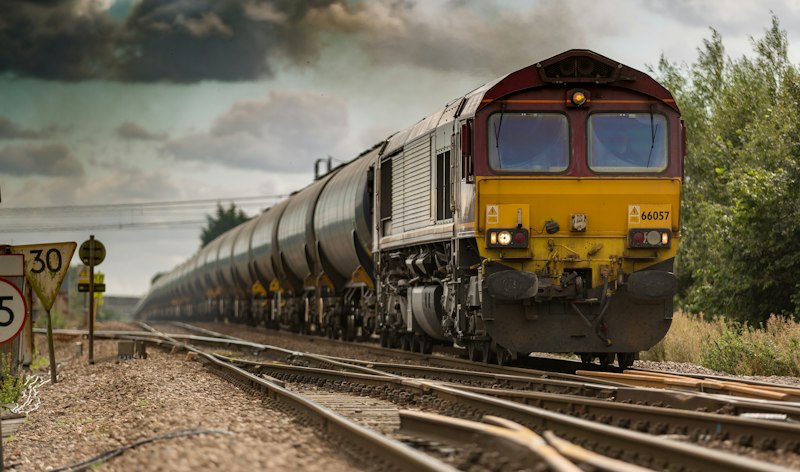
In an age of budget flights, rediscover the romance and sustainability of train travel across continents.
We've been sold the lie that faster is better. That the destination matters more than the journey. But there's a movement gaining steam - literally - that challenges everything we think we know about travel. Welcome to slow travel by train.
## The Romance of Rails
There's something undeniably magical about train travel. The gentle rhythm of wheels on track, landscapes unfurling outside your window, the sense of connection to the earth beneath you.
Trains offer what air travel cannot:
- **Space to think**: Hours of uninterrupted time
- **Changing scenery**: Every hour brings new landscapes
- **Human connection**: Dining cars and observation lounges foster conversation
- **Comfort**: Walk around, stretch, read, nap in genuine comfort
- **The journey IS the destination**: You see countries, not just airports
## Epic Train Journeys Worth the Time
### The Trans-Siberian Railway
The ultimate rail adventure:
- **Route**: Moscow to Vladivostok (or Beijing via Mongolia)
- **Duration**: 7 days (non-stop) to 3 weeks (with stops)
- **Distance**: 9,289 km
- **Highlights**: Lake Baikal, Ulaanbaatar, endless taiga forests
- **Classes**: From basic kupe to luxury Golden Eagle
This journey changes you. You'll cross 8 time zones, share vodka with strangers, and witness Russia's vastness firsthand.
### The Glacier Express (Switzerland)
"The slowest express train in the world":
- **Route**: Zermatt to St. Moritz
- **Duration**: 8 hours
- **Highlights**: 291 bridges, 91 tunnels, Oberalp Pass
- **Features**: Panoramic windows, gourmet dining
Not long in distance, but every minute delivers Alpine perfection.
### The Ghan (Australia)
Crossing the Australian continent:
- **Route**: Adelaide to Darwin
- **Duration**: 3 days
- **Distance**: 2,979 km
- **Highlights**: Red Centre, Katherine Gorge, Alice Springs
The world's longest north-south rail journey through the heart of the Outback.
### The Eastern & Oriental Express (Southeast Asia)
Colonial luxury through tropical landscapes:
- **Route**: Singapore to Bangkok
- **Duration**: 3-4 days
- **Highlights**: Malaysian jungle, River Kwai, Thai temples
- **Experience**: Belmond luxury with Asian cuisine
### The California Zephyr (USA)
America's most scenic route:
- **Route**: Chicago to San Francisco
- **Duration**: 51 hours
- **Highlights**: Rocky Mountains, Sierra Nevada, Colorado River canyon
Amtrak's crown jewel cuts through the heart of the American West.
## Why Slow Travel Matters
### Environmental Impact
- Train travel produces 90% less CO2 than flying per passenger kilometer
- One cross-Europe flight = 6 months of train commuting
- As climate awareness grows, rail becomes the ethical choice
### Economic Benefits
- Money stays in communities along the route
- Supports local businesses at stops
- Creates more jobs per passenger than aviation
### Personal Benefits
- **Reduced stress**: No airport security, no baggage limits, no jet lag
- **Deeper experiences**: You arrive understanding the landscape
- **Creative thinking**: The rhythm induces flow states
- **Relationships**: Shared meals create lasting connections
## Making Train Travel Work
### Planning Strategies
**The Pass vs. Point-to-Point Decision**
- Eurail/Interrail passes for Europe multi-country trips
- Individual tickets often cheaper for single-country focused travel
- Research reservation requirements (high-speed trains often need them)
**Overnight Trains**
- Save accommodation costs
- Cover distance while sleeping
- Book private cabins when budget allows
- Bring earplugs and eye mask
**Break Up Long Journeys**
- Stop for a day or two in interesting cities
- Turn transport into destination
- Bookend with nights in starting/ending cities
### Practical Tips
**Packing for the Rails**
- Layers (temperature varies dramatically)
- Good book or e-reader loaded
- Snacks (dining cars can be expensive)
- Power bank (outlets not always available)
- Flip-flops (for walking around train)
- Small daypack for at-seat essentials
**Staying Comfortable**
- Book seats facing forward if prone to motion sickness
- Lower berths on sleepers have more space
- Window seats for scenery; aisle for bathroom access
- Bring a reusable water bottle (fill at stations)
**Making Friends**
- Dining cars are social centers
- Observation lounges invite conversation
- Share snacks with compartment mates
- Learn basic phrases in local languages
## The Digital Nomad's Dream
Train travel is perfect for remote workers:
- Reliable WiFi on many modern trains
- Power outlets at seats
- Quiet cars for focused work
- Inspiration from passing landscapes
- Time zone changes happen gradually
Popular routes for working travelers:
- European high-speed network
- Japan's Shinkansen (bullet trains)
- China's extensive CRH network
- India's Rajdhani Express
## Challenges and Solutions
**Time Constraints**
- Use overnight trains strategically
- Mix rail and air (fly there, train back)
- Prioritize one direction for the scenery
**Cost Concerns**
- Book early for discounts
- Consider regional passes
- Sleeper trains save hotel costs
- Off-peak travel is cheaper
**Complex Routes**
- Use Rail Europe or Trainline for booking
- Apps like Rome2Rio show multi-leg options
- Station staff are usually helpful
## The Future of Train Travel
New developments making rail more attractive:
- **Sleeper trains returning**: Paris-Vienna, Brussels-Berlin, Stockholm-Malmö
- **High-speed expansion**: Spain, China, and Middle East leading
- **Nightjet network**: ÖBB expanding across Europe
- **Hydrogen trains**: Germany already running emission-free services
- **Better booking**: Real-time availability, mobile tickets
## Starting Your Slow Travel Journey
### Beginner Routes (1-2 days)
- London to Edinburgh (4 hours, beautiful)
- Rome to Florence (1.5 hours, Tuscan countryside)
- Osaka to Hiroshima (1.5 hours, Shinkansen experience)
- San Francisco to Los Angeles (Coast Starlight, 12 hours)
### Intermediate Routes (2-5 days)
- Paris to Barcelona (with stops in Carcassonne)
- Munich to Venice (via Brenner Pass)
- Chennai to Mumbai (Indian Railways experience)
- Santiago to Puerto Montt (Chile's Lake District)
### Epic Routes (1-2 weeks+)
- London to Istanbul (Orient Express route)
- Vancouver to Los Angeles (Coast Starlight)
- Beijing to Lhasa (Tibet railway, highest in world)
- Cape Town to Johannesburg (Shosholoza Meyl)
## Final Thoughts
Slow travel by train isn't just transportation - it's a philosophy. It says that how you get somewhere matters as much as arriving. That connection - to landscapes, to people, to yourself - is worth more than saved hours.
In our rush to accumulate destinations, we forget that the best travel memories often happen in between: the sunrise over Mongolian steppe from a Trans-Siberian window, the shared bottle of wine with strangers in a dining car, the realization that you've just understood a country by watching it pass at 60 mph.
Book the train. Take the slow route. The world looks different from the tracks.